
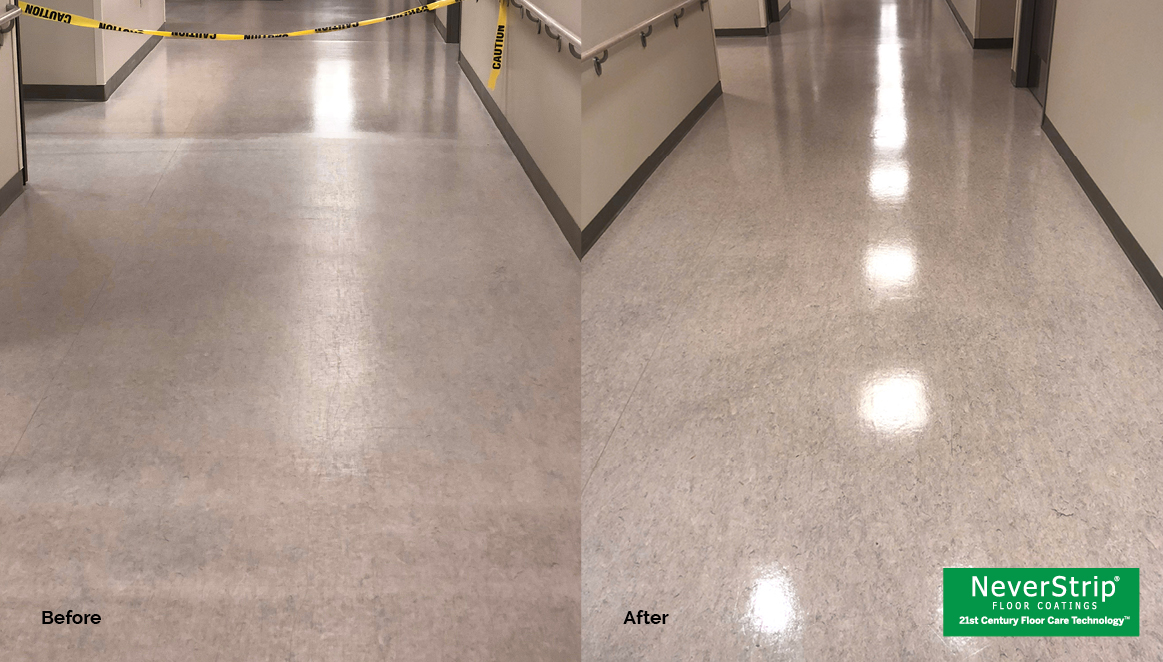
floor-care-without-stripping-before-after

Eco-Friendly Floor Care Without Stripping: What Facility Managers Need to Know

Sustainability in commercial buildings has moved from aspiration to measurable performance. Commercial facility managers, building operations teams, and environmental services departments are being asked more detailed questions about their maintenance programs:

  • How much chemical volume is used annually on floors?

  • How much wastewater is generated through stripping processes?

  • How much labor is tied to recurring, periodic intensive projects?

  • What is the five- to ten-year lifecycle cost of a stripping based the floor care system?

Traditional strip-and-recoat programs remain one of the most chemically intensive and labor-demanding components of facility maintenance. As ESG reporting, budget scrutiny, and labor shortages continue to shape operations, many commercial facilities are reassessing whether routine stripping is still necessary.

This blog explains what non-stripping floor protection means, how Micron Sealer systems function, and why commercial facility managers are evaluating strip-less alternatives as part of 21st Century Floor Care.
Why Stripping Programs Are Being Reexamined

For decades, stripping was considered a standard reset for floors coated with traditional finishes, often referred to as “wax”. Over time, the cumulative, negative environmental and operational impacts have become clearer.

Chemical Intensity

Stripping requires concentrated chemical solutions designed to break down built-up layers of floor finish. Even when used properly, these products increase the total annual chemical volume across large areas.

In multi-building portfolios, this volume becomes significant from both cost and environmental reporting perspectives.

Water Usage and Wastewater

Stripping typically involves multiple rinse cycles and the management of slurry and wastewater. Facilities in regulated jurisdictions must consider discharge requirements and disposal protocols.

Reducing or eliminating removal cycles reduces associated water and electrical use and wastewater handling.

Material and Consumable Waste

Pads, removed floor finish, containers, and packaging contribute to waste streams that are often overlooked in sustainability calculations. Over several years, these materials represent a measurable environmental footprint.

Labor Concentration

Strip-and-recoat cycles require concentrated labor during limited time windows. In an environment defined by less floor care labor, these high-intensity projects create scheduling strain for custodial management and building operations teams, while also introducing workers to heightened risk of slip and falls.

When evaluated holistically, many commercial facility managers are asking whether full floor finish removal is operationally necessary or simply traditional.

What Non-Stripping Floor Protection Means in Practice

Non-stripping floor protection does not eliminate the need for maintenance. It eliminates the need for complete floor finish removal in a floor's lifecycle.

The Micron Sealer system is designed around micron-thin, non-yellowing, refreshable and durable protection without stripping. Rather than building thick, soft, removable layers that eventually require chemical breakdown, Micron Sealers form a controlled, dense, hard, and refreshable protective layer at the surface level.

When wear occurs, the surface can be refreshed with proper pads and cleaners, avoiding the need to strip or remove the Micron Sealer.

This structural shift from removal to refresh changes the environmental, labor, and lifecycle cost profile of the floor program.

Key characteristics of Micron Sealer systems include:

  • Micron-thin applications

  • Approximately 10-minute dry times between applications

  • No need for stripping in a normal lifecycle

  • Continuously refreshable with common floor care practices using proper pads and cleaners

  • Suitable for all non-carpet floors

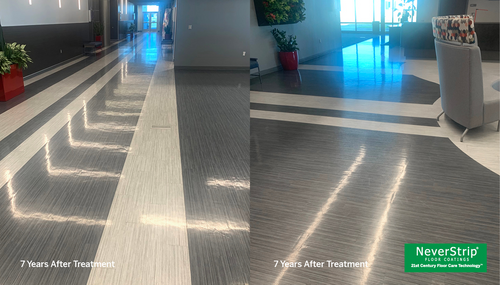
This approach supports maintaining or restoring appearance without recurring chemical reset cycles.

commercial-floor-protection-without-stripping-7-years

Environmental Impact Over a Multi-Year Lifecycle

Sustainability discussions increasingly focus on lifecycle modelling rather than isolated product claims.

When comparing traditional floor care programs using floor finish to Micron Sealer systems over multiple years, several differences emerge.

1. Reduced Chemical Volume

Eliminating periodic stripping reduces the total quantity of chemical solutions introduced into the facility. This reduction supports environmental reporting initiatives and internal sustainability targets.

2. Lower Water Consumption

Without removal cycles, water usage associated with stripping and rinsing decreases. For large campuses and high-traffic commercial buildings, the cumulative savings are measurable.

3. Reduced Waste Stream

Because Micron Sealer applications do not require routine stripping in a normal lifecycle, facilities avoid generating stripping slurry and removing finish debris. Consumable waste related to removal projects also declines.

4. Lower Lifecycle Costs

Environmental efficiency and financial efficiency often align. Reducing chemical purchases, minimizing labor-intensive projects, and limiting downtime contribute to lower lifecycle costs.

For commercial facility managers balancing sustainability mandates with budget realities, lifecycle performance matters more than initial material cost.

Application Across Commercial Floor Types

Commercial facilities rarely manage a single floor surface. Compatibility is a practical requirement.

Micron Sealers are suitable for all non-carpet floors, including:

  • LVT

  • VCT

  • Sheet vinyl

  • Linoleum

  • Rubber

  • Bio-based tile

  • Terrazzo

  • Stone

  • Concrete

  • Ceramic and porcelain

  • Brick

For LVT and similar resilient flooring with factory-applied urethane, Micron Sealer applications help protect that original surface layer rather than aggressively altering or removing it. This supports long-term durability and consistent appearance.

Instead of repeatedly building and removing thick layers, commercial facility managers can implement a refreshable protection strategy that preserves the integrity of the underlying floor.

Addressing the Reality of Less Floor Care Labor

Labor constraints continue to influence maintenance strategy. Many custodial departments are responsible for more square footage per technician than in previous decades.

Traditional strip-and-recoat projects require:

  • Off-hour scheduling

  • Concentrated staffing

  • Extended dry times

  • Area shutdown and restricted access

  • Odor concerns

  • Slip and fall risks

Micron Sealer systems dry in approximately 10 minutes between applications. Because there is no stripping step in a normal lifecycle, disruptive reset projects are significantly reduced.

This allows environmental services departments to:

  • Reallocate labor to daily cleaning and infection prevention

  • Maintain consistent performance across large portfolios

  • Reduce emergency corrective maintenance

  • Improve scheduling predictability

Sustainable floor care must account for labor availability as much as environmental impact.

Maintaining or Restoring Appearance Without Full Removal

A common concern is whether eliminating stripping compromises visual performance.

Micron Sealers are designed to be refreshable. When traffic patterns show wear, the surface can be renewed without removing previous protection layers with proper pads, cleaners and sealers.

This controlled maintenance approach supports:

  • Consistent gloss and appearance management

  • Targeted refresh in high-traffic areas

  • Long-term protection durability

  • Reduced disruption to building occupants

Eco-friendly floor care is not defined by reduced performance. It is defined by reducing unnecessary inputs and outputs while maintaining operational standards.

Frequently Asked Questions

Does non-stripping mean floors never need attention?

No. Routine cleaning and periodic refresh remain essential. Non-stripping refers to eliminating complete floor finish removal during a normal lifecycle.

Is this appropriate for healthcare, education, or hospitality environments?

Yes. Micron Sealer systems are used across healthcare, education, hospitality, and commercial facilities where durability, hygiene support, and consistent appearance are required.

How does the lifecycle cost compare over five years?

Results vary by facility size, traffic level, and maintenance practices. However, eliminating stripping cycles typically reduces chemical purchasing, concentrated labor events, and operational downtime, contributing to lower lifecycle costs.

Can high-traffic areas be managed effectively?

Yes. High-traffic zones can be refreshed selectively, allowing commercial facility managers to maintain performance without full-area resets.

A Structural Shift in Floor Care Strategy

Eco-friendly floor care is not about substituting one product for another. It is about rethinking how floors are protected and maintained.

When commercial facility managers eliminate unnecessary stripping cycles, they reduce:

  • Chemical exposure

  • Water usage

  • Waste generation

  • Labor concentration

  • Operational disruption

Non-stripping floor protection represents a structural shift toward refreshable and durable protection that aligns sustainability with practical facility management.

Stripping has long been considered routine. Today, routine practices are being evaluated against measurable environmental, financial, and labor benchmarks.

Micron Sealer systems provide a controlled alternative designed to maintain or restore appearance without routine removal. For commercial facility managers seeking lower lifecycle costs, reduced floor care labor demands, and responsible chemical use, this shift warrants careful consideration.

Contact NeverStrip to evaluate whether a Micron Sealer system aligns with your facility’s sustainability goals and long-term operational objectives.