
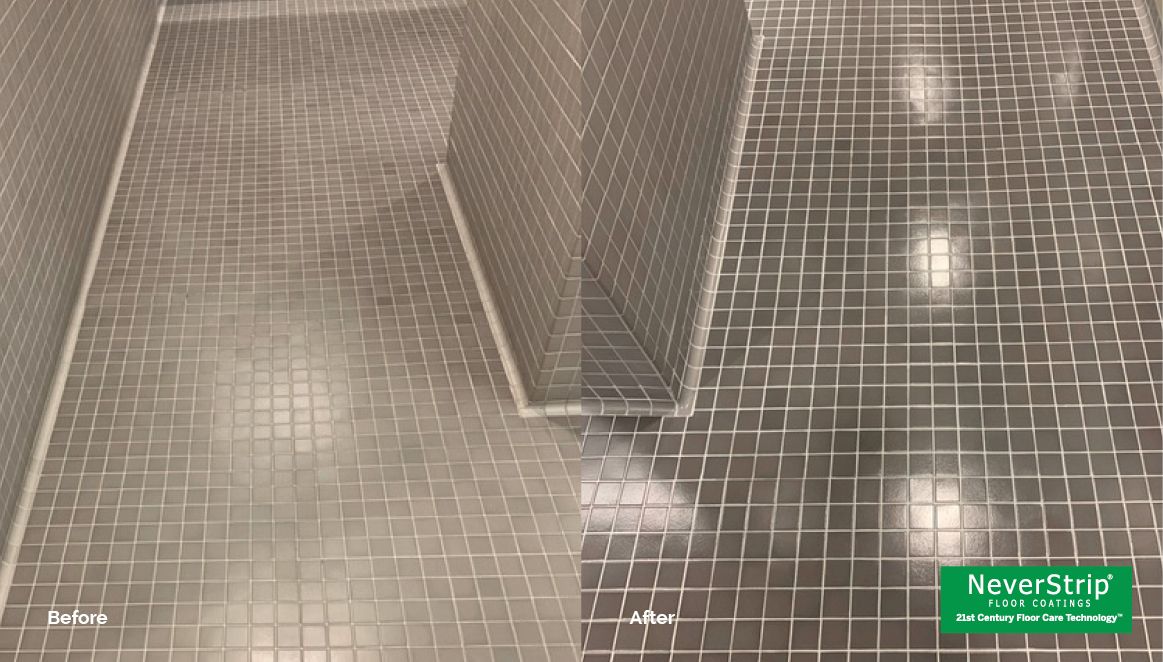
When evaluating modern floor protection options, one of the most common questions facilities ask is how Micron Sealers compare with traditional floor coatings. At a glance, both are designed to protect floors and maintain appearance, but how they work and what they require over time are fundamentally different.
Understanding this difference is critical for facilities trying to reduce maintenance disruption, manage labor shortages, and extend the life of their flooring without relying on outdated strip-and-recoat cycles.
This blog breaks down how Micron Sealers differ from traditional coatings and why those differences matter in real-world environments.
How Traditional Floor Coatings Work
Traditional floor coatings and finishes protect floors by building thickness on the surface. Each application adds another layer, which can initially improve appearance and provide short-term protection.
Over time, however, these layers accumulate.
As the buildup increases:
Floors lose clarity and uniformity
Scratches and wear become more visible within the coating itself
Maintenance becomes more complex
Stripping becomes necessary to remove accumulated layers
Stripping is not simply a reset. It is a disruptive, labor-intensive process that exposes flooring to chemical stress, moisture intrusion, and long-term surface damage. In today’s facilities, where labor availability and downtime are limited, these cycles are increasingly difficult to sustain.
Traditional coatings rely on thickness to deliver protection, but that same thickness is what eventually creates maintenance challenges.
How Micron Sealers Work Differently
Micron Sealers take a fundamentally different approach to floor protection.
Instead of building bulk on the surface, Micron Sealers are applied at a microscopic level. Each application forms an ultra-thin protective layer measuring approximately 1.5 microns. For perspective, a human hair is typically 50 to 70 microns thick.
This precision matters.
Micron Sealers penetrate and bond with the flooring surface, creating protection from the inside out rather than sitting on top of the floor. Because each layer is so thin, protection can be refreshed over time without buildup and without removing previous applications.
This is what allows Micron Sealers to support non-stripping floor protection programs.
Thickness vs Protection: A Key Distinction
One of the biggest misconceptions in floor care is that thicker coatings provide better protection.
In reality, thickness often masks wear rather than preventing it.
Traditional coatings:
Accumulate visible wear within the coating
Require periodic removal
Can change the natural appearance of the floor
Micron Sealers:
Protect without altering the floor’s natural look
Maintain clarity and consistency over time
Allow maintenance teams to refresh protection (in the field) instead of removing it
Protection is not about how much product is on the floor. It is about how effectively the surface is shielded from wear while remaining maintainable long-term.
Maintenance Implications Over Time
The difference between Micron Sealers and traditional coatings becomes most apparent over the life of the floor.
Traditional coating programs often require:
Scheduled stripping cycles
Specialized labor and training
Extended downtime
Increased chemical use
Micron Sealer systems are designed to be maintained through routine floor care. As wear occurs, additional micron-level applications can be added to refresh protection without stripping, or aggressive removal.
This simplifies maintenance planning and reduces disruption, particularly in occupied buildings such as healthcare facilities, schools, and commercial spaces.
Appearance and Consistency
Another important distinction is how each system affects floor appearance.
Traditional coatings can:
Create uneven buildup
Yellow or haze over time
Highlight traffic patterns as layers wear inconsistently
Micron Sealers preserve the natural appearance of the floor. Because protection is applied evenly at the micron level, floors maintain a consistent look across large areas without the artificial gloss or buildup often associated with traditional finishes.
This consistency matters in environments where appearance reflects cleanliness, safety, and professionalism.
Why This Difference Matters Today
Facilities today are operating under tighter constraints than ever before. Labor shortages, sustainability expectations, and reduced tolerance for downtime have changed how floor care decisions are made.
Understanding the difference between Micron Sealers vs traditional floor coatings allows decision-makers to evaluate protection strategies based on:
Long-term maintenance realities
Floor lifecycle costs
Operational disruption
Environmental and chemical exposure considerations
Micron Sealers align with modern floor care expectations by offering durable, refreshable protection without relying on stripping-based maintenance cycles.
Choosing the Right Approach
Not all floors or environments have the same needs, but understanding how protection systems function helps clarify which approach is sustainable over time.
If your facility is exploring ways to:
Reduce reliance on stripping
Maintain a consistent appearance
Extend floor life
Simplify maintenance programs
Learning more about how Micron Sealers are used in real-world environments can provide valuable insight. This comparison is often the first step toward rethinking how floor protection is managed moving forward.
Frequently Asked Questions
Are Micron Sealers the same as floor coatings?
No. Micron Sealers are not traditional floor coatings. While coatings rely on building thickness on the surface, Micron Sealers are applied at a microscopic level and bond with the floor surface to provide refreshable protection without buildup.
Do Micron Sealers eliminate the need for stripping?
Yes, when properly maintained. Micron Sealers are designed to support non-stripping floor care programs by allowing protection to be refreshed over time rather than removed through aggressive stripping cycles.
Are Micron Sealers durable if they are so thin?
Yes. Durability is not determined by thickness alone. Micron Sealers protect floors through surface bonding and controlled application, allowing them to withstand real-world wear while remaining maintainable long-term.
Can Micron Sealers be used in high-traffic environments?
Yes. Micron Sealers are commonly used in high-traffic environments such as healthcare, education, retail, and commercial facilities where consistent appearance and minimal downtime are critical.
Why do traditional floor coatings eventually require stripping?
Traditional coatings build up over time. As layers accumulate, floors lose clarity and performance, making stripping necessary to remove buildup. This process can be disruptive and damaging to flooring materials over repeated cycles.
Want to Learn More About Micron Sealers for Your Facility?
Understanding the difference between Micron Sealers and traditional floor coatings is often the first step in evaluating modern floor protection options.
If you’d like to explore whether Micron Sealers are a good fit for your facility, floor type, or maintenance program, the NeverStrip team can help answer questions and provide guidance based on real-world use cases.
You can contact us to discuss your specific environment, or explore real-world applications in the NeverStrip photo gallery to see how Micron Sealers are used across different facilities.