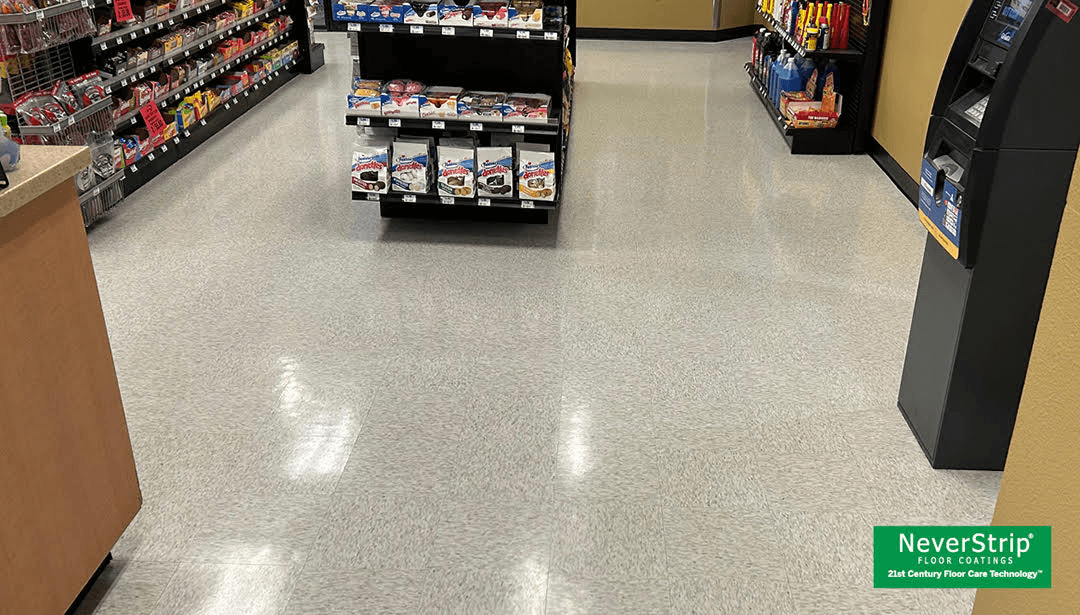
Resilient Flooring (1).png

What Are Micron Sealers and How Do They Work in Modern Floor Care

Commercial floor care is under pressure. Facilities are managing more square footage with fewer maintenance staff, while operational disruption from traditional strip-and-recoat programs creates scheduling challenges, chemical exposure concerns, and rising labor costs. Micron Sealer systems represent a different approach, one built around refreshable, non-stripping floor protection designed for the realities of modern facility maintenance.

This blog explains what Micron Sealers are, how they work, how they differ from traditional floor-finish systems, and why more facilities are moving toward modern floor-protection programs.

What Are Micron Sealers

Micron Sealers are water and inorganic-based, micron-thin protective systems designed for hard surfaces, including flooring and vertical substrates. Unlike traditional floor finish systems that build up thick, softer, less dense layers over time, Micron Sealers form a dense, hard, durable, Micron-thin, refreshable protective layer with outstanding surface bonding, including on glass, without any mechanical abrasion of the surface. Soil and contaminants remain on the surface and do not embed in the Micron Sealer, allowing for their continuous removal during cleaning and thereby eliminating the need to strip the product from the floor.

Micron Sealers are not a wax, a finish, or a traditional coating, such as a urethane. They are based on a 21st-century surface protection technology/system engineered to protect the underlying surface, including factory-applied urethane coatings on luxury vinyl tile (LVT), while remaining continuously maintainable without disruptive removal procedures and often without reapplication.

Micron Sealer systems are compatible with a wide range of hard surface flooring and other surface types, including:

  • Luxury Vinyl Tile (LVT) and sheet vinyl

  • VCT and linoleum

  • Rubber and bio-based tile

  • Natural Stone, terrazzo, and concrete

  • Urethane and epoxy

  • Wood and cork

  • Cementitious overlays

  • Ceramic, porcelain, and brick

  • Glass

This broad compatibility makes Micron Sealer systems applicable to virtually any commercial hard-surface flooring environment, indoors or outdoors.

How Micron Sealers Work

Micron Sealers are applied in thin, controlled layers that dry in ten minutes or less between applications. Rather than building thickness with each coat, the system is designed to bond directly to the floor surface without mechanical abrasion or conditioning and to itself during refresh cycles, maintaining a stable, consistent, Micron-thin protective layer rather than accumulating to a higher thickness over time.

This application model has several practical implications for floor care programs:

  • A 10-minute dry time between applications keeps maintenance windows short.

  • The system protects factory-applied urethane and other coating surfaces, which is particularly relevant for LVT floors that are vulnerable to scratching and abrasion in commercial environments and lack a cost-effective way to refresh the surface without Micron Sealers.

  • Micron Sealers are micron-thin. A typical application has a dry film thinness of 1.65 microns. Human hair is generally 50 to 70 microns thick. Three applications of dry Micron Sealer are less than 5 microns. Because the protection layer is dense and hard, soil and contaminants stay on the surface and do not embed into the Micron Sealer film. This means the floor does not need to be stripped of its finish, since contaminants are removed with standard cleaning practices. Compared to soft, thick floor finishes or wax, where soils and contaminants become embedded below the surface and are removable only by removing or stripping the floor finish.

  • The Micron system is designed to be refreshed continuously through routine floor-care cleaning practices, often without new product applications, thereby avoiding the need for continuous or frequent scrubbing, recoating, and stripping with conventional floor finish-based systems.

The refresh process is straightforward enough to be performed by in-house custodial staff or floor care contractors, reducing reliance on specialized labor for routine maintenance

How Micron Sealers Differ From Traditional Floor Finishes

To understand why Micron Sealer systems represent a meaningful shift in the approach to floor care, it helps to look directly at how they differ from traditional floor-finish and strip-and-recoat programs.

Traditional Floor Finish Systems:

  • Build thick layers over time

  • Yellows from UV light; indoor only

  • Require frequent scrub and recoat processes

  • Require more refinishing steps

  • Require periodic stripping

  • More labor hours and higher labor cost

  • Use aggressive stripping chemicals with high odor & dangerous slip conditions

  • Create extended downtime

  • Inconsistent results and appearance over time

  • 30-45 minute dry times

  • Many more applications over time

  • Higher lifecycle costs

  • Indoor only

  • Fundamentally sustainable

Micron Sealer Systems:

  • Micron-thin, non-building protection; fewer applications over time

  • No stripping in a normal lifecycle, but can be removed simply

  • Reduced labor requirements

  • Lower lifecycle costs

  • No aggressive stripping chemicals

  • ~10-minute dry time

  • Consistent, refreshable appearance

  • Fundamentally sustainable

  • Indoor and outdoor; UV-resistant

Why Traditional Floor Care Systems Are Becoming Harder to Sustain/Justify?

Strip-and-recoat floor maintenance programs were developed in an era when maintenance labor was widely available, facilities were smaller, and operational disruption was more tolerable; better options did not exist and lack of sustainability was tolerated. Those conditions no longer reflect the reality facing commercial facilities.

Several converging pressures are making traditional floor care programs increasingly difficult to sustain at scale:

  • Labor shortages across the facility maintenance sector have reduced the available workforce for labor-intensive scrub and recoating; 5-6 applications; more frequent burnishing and stripping and recoating procedures.

  • Facilities are managing larger floor areas with the same or fewer maintenance staff, making high-labor floor care programs operationally impractical.

  • Healthcare, education, retail, and other high-occupancy environments have limited tolerance for downtime, restricting access to areas where stripping is underway.

  • Rising oil based material costs and higher labor costs mean that programs dominated by more frequent product usage and repetitive labor hours — scrub and recoating, more applications, stripping, recoating, drying, reopening — carry increasing lifecycle cost.

  • Inconsistent execution due to staff turnover or lack of training leads to uneven results across large floor areas.

  • Concerns over the caustic nature of chemicals for stripping are no longer acceptable by many.

  • Sustainability concerns are now more important and maintaining floor finish or was is inherently non-sustainable.

  • The elimination of PFAS chemicals from floor finish has further lowered their performance.

These pressures are not temporary. They reflect structural shifts in the facility maintenance market and in how commercial buildings are operated. Floor care programs that depend on high labor input and extended downtime and unsustainable practices are increasingly misaligned with operational reality.

The Role of Refreshability in Modern Floor Care without Stripping

One of the most operationally significant characteristics of Micron Sealer systems is that they are designed to be cost-effectively refreshed as part of ongoing routine floor care rather than a process based on continuous new floor finish applications, removal and reapplications.

In a traditional floor-finish program, the maintenance cycle follows a predictable pattern: the finish builds up over time, the appearance degrades, and the only corrective action is to scrub and recoat or strip everything down and start over. These reset cycles are the primary drivers of labor cost, chemical use, and operational disruption in conventional floor care programs.

Micron Sealer systems are structured differently. Rather than removing and rebuilding protection, the system is maintained through ongoing refresh procedures that restore appearance and protection often without new product applications (scrub and recoats) and essentially never by stripping. This shifts the maintenance model from periodic, disruptive reset cycles to continuous, low-impact upkeep.

The practical benefits of this approach include:

  • Floors can be maintained without scheduling major scrub and recoat and strip-and-recoat shutdowns.

  • In-house custodial teams can perform routine refresh procedures without specialized training or contractor engagement for every maintenance cycle.

  • Appearance remains consistent across large floor areas over time, rather than degrading between reset cycles.

  • The total labor required to maintain a given floor area is reduced compared to traditional finish-based programs.

  • Lower lifecycle cost of floor ownership

This is where the lifecycle cost advantage of Micron Sealer systems becomes most apparent. Traditional floor maintenance programs are approximately eighty percent labor cost and twenty percent product cost. Systems that reduce labor hours by simplifying maintenance and eliminating stripping entirely generate significant long-term economic advantages.

Reducing Downtime and Operational Disruption

In occupied facilities, maintenance activities that restrict floor access create direct operational costs. Areas taken out of service for scrub and recoats, stripping, recoating, and drying cannot be used by staff, patients, students, customers, or visitors. In high-traffic environments, scheduling these shutdowns requires coordination across facility operations, security, and building management.

Micron Sealer systems are designed for rapid application and far fewer floor care events. Less frequent floor care events combined with faster ten minutes of dry time between applications (versus 30-45 minutes with floor finish), combined with 20-30% fewer applications, allow floors to remain accessible rather than being taken out of service for extended periods. This makes routine maintenance scheduling significantly less disruptive.

This characteristic is particularly relevant in:

  • Healthcare facilities where floor access affects patient care operations and infection control protocols.

  • Educational buildings where floor maintenance must fit within tight scheduling windows, especially during the summer months.

  • Retail environments where floors must remain open during business hours.

  • Airports, transportation hubs, and other high-occupancy facilities where uninterrupted access is operationally critical.

Eliminating floor finish scrub and recoating and stripping activities also removes the need to manage the hazards of wet floors during these operations, reduces or eliminates odors, and reduces the risk of slips for maintenance staff and occupants.

Safety and Chemical Exposure Considerations

Traditional strip-and-recoat floor maintenance programs rely on highly alkaline or caustic chemical strippers. These materials require careful handling and trigger additional workplace safety obligations.

Under OSHA standards, facilities that use corrosive materials are required to provide emergency eyewash stations in close proximity to the hazard area. Portable eyewash units must deliver continuous flushing for an extended period and require regular inspection and maintenance. These requirements add operational complexity, costs and ongoing compliance responsibility to stripping procedures.

Beyond regulatory requirements, chemical strippers pose direct exposure risks to maintenance staff during application, dwell time, and removal. Adequate ventilation, personal protective equipment, and proper waste disposal all add time and cost to stripping operations.

Modern, refreshable Micron Sealer floor protection systems reduce or eliminate the need for aggressive stripping chemicals. This simplifies the maintenance program, reduces chemical-handling requirements, and lowers the safety-compliance burden associated with floor-care operations.

Are Micron Sealers PFAS-Free?

As concerns grow around PFAS (per- and polyfluoroalkyl substances), often referred to as “forever chemicals,” many facility managers are re-evaluating the products used in their maintenance programs.

Micron Sealers are designed without reliance on PFAS-based chemistry, offering a forward-thinking solution that aligns with modern environmental and safety expectations.

Where Micron Sealer Systems Are Used

Micron Sealer systems have been applied and maintained across tens of millions of square feet of commercial flooring globally since 2013. They are in active use across a range of demanding facility types, including:

  • Healthcare facilities, where floor durability, infection control, and maintenance scheduling constraints make refreshable, non-stripping systems operationally well-suited.

  • Educational buildings, including K-12 schools and post-secondary campuses, where large floor areas, limited custodial staff, and restricted maintenance windows favor simplified floor care programs.

  • Retail environments are where consistent floor appearance and minimal downtime are directly tied to customer experience.

  • Airports and transportation facilities, where floors must remain accessible continuously and maintenance must fit within narrow operational windows.

  • Commercial office buildings and mixed-use facilities, where lifecycle cost and appearance consistency across large areas are primary evaluation criteria.

This application history across diverse facility types and environments demonstrates that Micron Sealer systems function as a proven floor care approach, not a theoretical alternative to traditional programs.

Victoria College 9-Year Video Case Study

Victoria College, a 4,000-student community college in Victoria, Texas, had problems with its LVT flooring. Texan Floor Service, an employee-owned commercial flooring company serving the Houston area, was brought in to find a solution.

This is an example of what is possible.

A Shift Toward Modern Floor Care Systems

The floor care industry is in the middle of a meaningful transition. Traditional strip-and-recoat programs, developed decades ago for a different operational context, are increasingly misaligned with how commercial facilities are managed today.

The shift is not primarily driven by new product technology. It is driven by operational necessity. Facilities with shrinking maintenance teams, rising labor costs, and zero tolerance for downtime cannot sustain maintenance programs built around high-labor, high-disruption procedures.

Modern floor protection systems, including Micron Sealer systems from NeverStrip, are designed around these realities. They provide durable, refreshable protection on a wide range of hard-surface floors, support simplified maintenance by in-house or contract staff, eliminate stripping from the normal maintenance cycle, and reduce the total lifecycle cost of floor care.

For facility professionals evaluating floor care programs, the relevant question is no longer simply which product to use — it is which maintenance system aligns with the facility's operational, financial, and sustainability objectives over time.

Frequently Asked Questions

What types of floors can Micron Sealers be used on?

Micron Sealers are designed for virtually all hard surface flooring types, including LVT, VCT, sheet vinyl, linoleum, rubber, bio-based tile, stone, terrazzo, concrete, ceramic, porcelain, and brick — indoors and outdoors.

Do Micron Sealers require stripping?

No. Micron Sealer systems are designed to be maintained without stripping during a normal lifecycle. The system is refreshed rather than removed and reapplied.

How are Micron Sealer systems maintained?

Maintenance is performed through periodic refresh procedures that restore protection and appearance. These procedures can be performed by in-house custodial staff or floor care contractors without stripping.

How long do Micron Sealer systems last?

Because the system is refreshable rather than consumable in the traditional sense, its effective lifecycle is tied to the ongoing refresh program rather than a fixed product lifespan. Properly maintained Micron Sealer systems have been in service across high-traffic commercial environments for extended periods.

Can Micron Sealers be used on LVT floors?

Yes. LVT is one of the most relevant applications for Micron Sealer systems. Factory-applied urethane coatings on LVT are vulnerable to scratching and abrasion in commercial environments. Micron Sealers are designed to protect these coatings and extend the usable life of the floor surface without the need for conventional finish programs that can void LVT warranties.
Evaluate Your Floor Care Program

If your facility is running a traditional strip-and-recoat maintenance program, it may be worth evaluating whether that program is aligned with your current operational, labor, and lifecycle cost objectives.

NeverStrip works with distributors, contractors, and facility professionals to help evaluate how Micron Sealer systems may fit within specific floor care programs. If you are assessing alternatives to traditional floor maintenance, contact NeverStrip to discuss your facility's requirements.