
Deeply textured porcelain and ceramic tile are practical choices for many commercial environments. They are durable, available in a wide range of finishes and commonly used in entrances, restrooms, locker rooms, kitchens, pool areas and other demanding spaces.
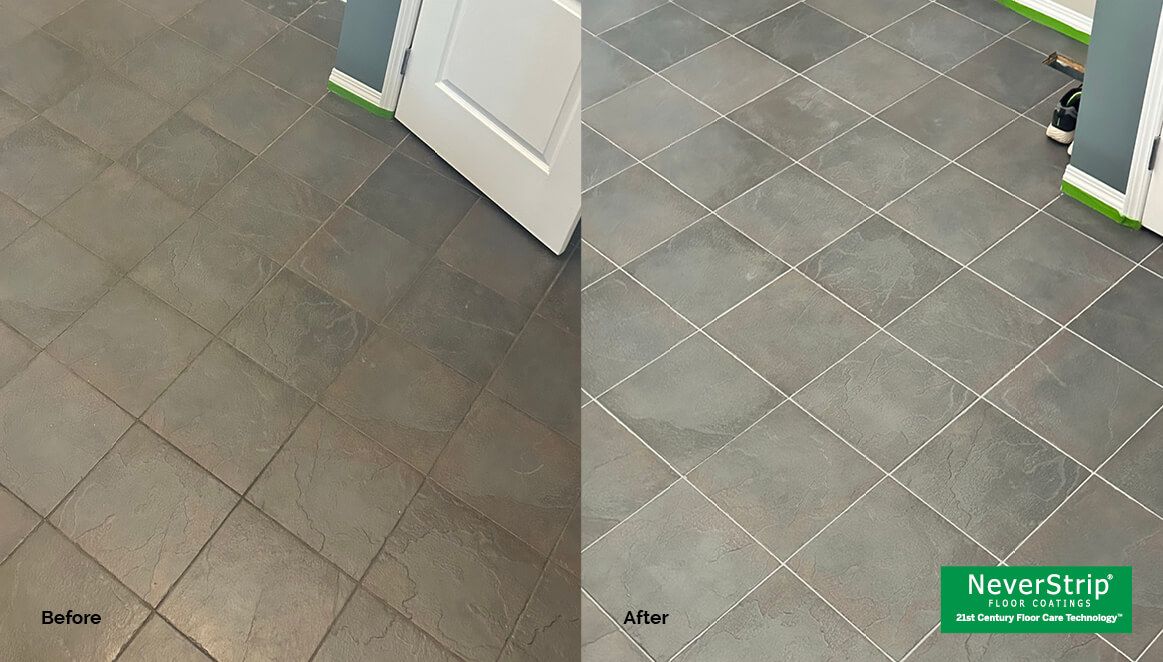
How to Clean Deeply Textured Porcelain and Ceramic Tile and Keep It Clean
Textured porcelain is a practical choice for commercial spaces. It is durable, comes in a wide range of finishes and gives traction where floors get wet, which is why it shows up in entrances, restrooms, locker rooms, kitchens and pool areas.
The trouble usually starts a few months after installation. Anyone responsible for a heavily textured porcelain floor knows that getting it clean, and keeping it looking clean, takes far more effort than expected. In most cases, the texture is what makes these floors so demanding.
Why Deeply Textured Tile Is Harder to Clean
Deeply textured porcelain and ceramic isn't flat. The ridges, grooves and low points that give it traction also give soil and contaminants a place to settle.
A mop or cleaning pad tends to ride across the raised portions of the tile without reaching the recessed areas. Whatever isn't removed builds up a little more with each pass, and eventually the floor looks dull or dirty even though the crew cleans it every day. Mopping more often rarely fixes it.
Getting soil out of those low points usually takes the right cleaner, enough dwell time for it to work, and mechanical agitation. Depending on the size of the area and how far the buildup has gone, that can mean brushes, proper pads or an auto scrubber instead of a mop.
Every one of those steps adds labor, and labor is already the largest cost in floor care, typically around 80% compared with 20% for product. A floor that was expected to be easy to maintain ends up taking more time than most of the building. When it falls behind, it's also the first thing people notice in an entrance or restroom. In pools, locker rooms and kitchens, buildup in the texture can also affect the traction the floor was chosen for in the first place.
Don't Forget About the Grout
Grout collects soil and contaminants too, and it discolors over time. A crew can get the surface clean and the floor will still look poorly maintained if the grout lines are dark or uneven.
The first step is finding out whether the grout is dirty or stained. Clean it properly, then take another look. If it comes back to its original color, cleaning was enough and there is no reason to do more.
If the discoloration stays, NeverStrip Color Seal is worth considering before anyone starts talking about regrouting or replacing the floor. Color Seal refreshes the color of existing grout lines. Once the grout looks right, the tile and grout can be sealed together as one surface.
The Cleaning Program Still Matters
Protection makes the floor easier to clean, but it still needs cleaning, and the choice of cleaner, pad and equipment matters just as much afterward.
NeverStrip's MicroBot products use beneficial microorganisms to digest organic soils such as fats, oils and uric acid where they sit, including in grout lines and textured surfaces a mop can't reach. They can be built into the daily program based on the floor's condition and the soils it sees most, whether that's grease in a kitchen or urine in a restroom. Combined with proper pads and cleaners, the aim is to maintain the protected surface without falling back on aggressive corrective cleaning.
That breaks the usual cycle of letting soil build up, deep cleaning and starting over. The floor is cleaned, restored where needed, protected and then maintained.
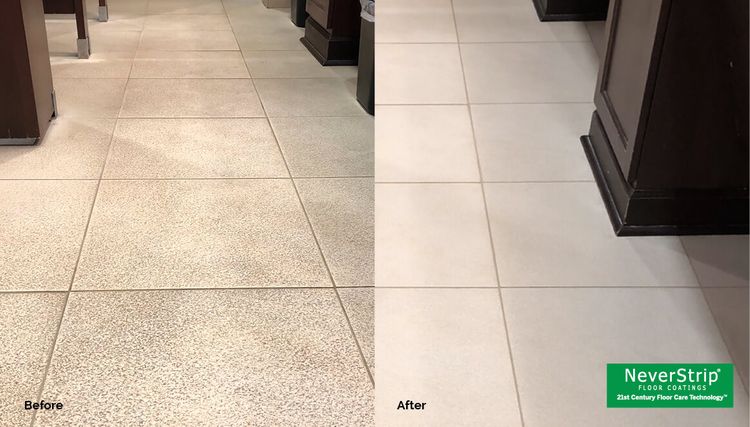
A Better Approach to a Difficult Floor
No single procedure fits every textured porcelain installation, so the starting point is always the condition of the whole floor.
A newer floor with grout in good condition may need only the right cleaning process and surface protection.
An older installation usually needs a thorough corrective cleaning first. If the grout is still discolored afterward, Color Seal comes next, followed by sealing the tile and grout together.
High-use restrooms, locker rooms and kitchens often benefit from Shield for ongoing odor control and stain release.
NeverStrip works with facilities to assess what their porcelain and grout actually need, then builds a floor-care plan around the existing surface. The floor will still need regular cleaning, but a difficult floor becomes easier and more cost-effective to keep looking the way it should.
Frequently Asked Questions
Will sealing textured porcelain make it slippery? NeverStrip Shield meets BOT 3000 and Pendulum wet slip standards. Tile Seal is applied at about 1.65 micrometers per coat, far thinner than the texture of the tile, so the surface that provides traction stays in place.
Will the floor need to be stripped later? No. Tile Seal and Shield require no stripping in a normal lifecycle. When the protection shows wear, it is refreshed rather than removed.
Can the grout be protected too? Yes. Once the grout is clean, or refreshed with Color Seal if cleaning isn't enough, the tile and grout are sealed together.
Do we need every product mentioned here? Not necessarily. A newer floor may need only the right cleaning program and protection. The products used depend on the condition of the floor and the problems you're trying to solve.
If textured porcelain or ceramic flooring is taking more time and labor than it should, talk to NeverStrip about the condition of your floor and the options to clean, restore, protect and maintain it.