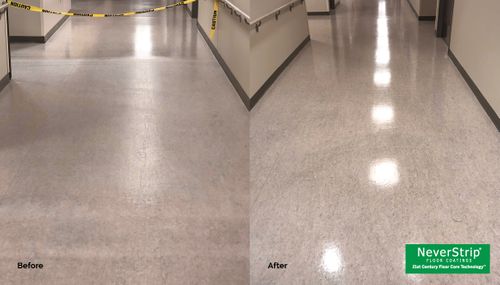
school hallway lvt floor neverstrip micron sealer

The Summer Floor Maintenance Window Is Gone. Here’s What That Means for Schools.

Summer is coming. The window is short. The crew is lean. And somewhere near the top of the maintenance list, probably right near the top, is stripping.

It’s always stripping.

For years, the education facility calendar had a reliable rhythm. School ends in June, the custodial team fans out across the building, and the floors get the full treatment. Strip, recoat, buff, repeat. There was enough time to do it right, let it dry, and have the place looking sharp before September.

That rhythm is harder to count on now.

Traditional Floor Care Was Built for a Different Schedule

Summer programs run longer. Sports camps and practices start earlier. Continuing education, community use, and staff professional development fill weeks that once sat empty. According to Cleaning & Maintenance Management, a leading industry trade publication, classrooms, hallways, cafeterias, and multipurpose areas in today’s schools are in near-constant use from morning to afternoon — leaving little to no window for labor-intensive floor work without disrupting occupants.

A proper strip-and-wax job requires uninterrupted time to prepare, strip, apply finish, and let it cure. The Budd Group, a national commercial facility services firm, notes that the full process can take up to 72 hours from start to finish when curing time is factored in. When facilities can’t get rooms empty, the work gets pushed to overnight shifts or long weekends. When that isn’t possible either, it gets deferred.

And deferred stripping has its own cost. According to Cleaning & Maintenance Management, repeatedly applying fresh wax over old layers causes buildup that yellows, hardens, and becomes significantly harder to remove over time. The delay doesn’t reduce the problem; it compounds it.

The window that strip-and-wax was built around has largely disappeared. The process hasn’t changed. The building just never empties the way it used to.

The Real Cost of Stripping a Building That’s Never Empty

Here’s the part that doesn’t get talked about enough.

Most of the cost in a traditional floor maintenance program isn’t the product. It isn’t the stripper, the finish, or the cleaning chemicals. Those costs are visible, which is exactly why they get scrutinized. But the cleaning industry’s widely cited ‘80/80 Rule’ holds that floors consume roughly 80% of a facility’s cleaning budget and 80% of custodial time. When your maintenance program is built around strip-and-recoat cycles, that labor intensity isn’t occasional — it’s structural.

That matters because strip-and-wax is an exceptionally labor-intensive process. The prep work. The wet floors. The fume management. The drying time. The coats of finish, each requiring its own cure window before new applications and foot traffic resume. Cleaning & Maintenance Management cites budget cuts, labor shortages, and skeleton crews as the defining challenges in school floor care today. Teams are already stretched thin, being asked to execute a process that demands concentrated, uninterrupted time they no longer have.

And then you do it again next year.

That’s the cycle. Not just of the maintenance program, but of the cost. The same labor hours, year after year, on a process that was designed decades ago when schools had longer windows, larger crews, lower wages and less scrutiny around the caustic chemicals involved.

More and more facility teams are also fielding complaints about stripping chemicals they didn’t use to hear, as well as odor issues, safety concerns, and the administrative burden of managing OSHA requirements around hazardous materials. That’s real friction on top of the schedule pressure, and it’s compounding.

The question worth asking is whether this is still the right program, or just the one that’s always been run.

Before and After Image of School Hallway

What a Different Program Actually Looks Like

The alternative to strip-and-wax isn’t “do nothing,” it’s a fundamentally different approach to what floor protection means.

NeverStrip’s Micron Sealer systems work by bonding directly to the floor surface rather than building up on top of it. The result is a dense, ultra-thin protective layer — 1.65 microns of dry film per application, compared to the thick, porous buildup that traditional floor finishes create over time. A human hair is somewhere between 50 and 70 microns thick. Three coats of a Micron Sealer is still thinner than that.

Because the layer is so thin, non-yellowing, and dramatically denser, it bonds directly to the floor surface. That allows day-to-day cleaning to remove soil and scuffs instead of embedding them into a sacrificial finish layer that eventually requires stripping.

When the floor needs refreshing, you’re not stripping anything off. You’re cleaning the surface; refreshing the surface with pads similar to refreshing a stone surface and reapplying with a dry time between coats of approximately 10 minutes. Micron Sealers are designed to avoid stripping, not just once but for decades or forever during a normal lifecycle.

That’s not a small operational change. A hallway that used to require a half-day shutdown for strip and recoat can be turned around in a fraction of that time, with no stripping chemicals, significantly less labor, and no extended wet-floor period.

For facilities managing multiple floor types — LVT, VCT, sheet vinyl, linoleum, rubber, bio-based tile, stone, terrazzo, concrete, ceramic, porcelain, and brick — one system works across all of them, which means the same training, the same products, and one consistent maintenance approach for the whole building.

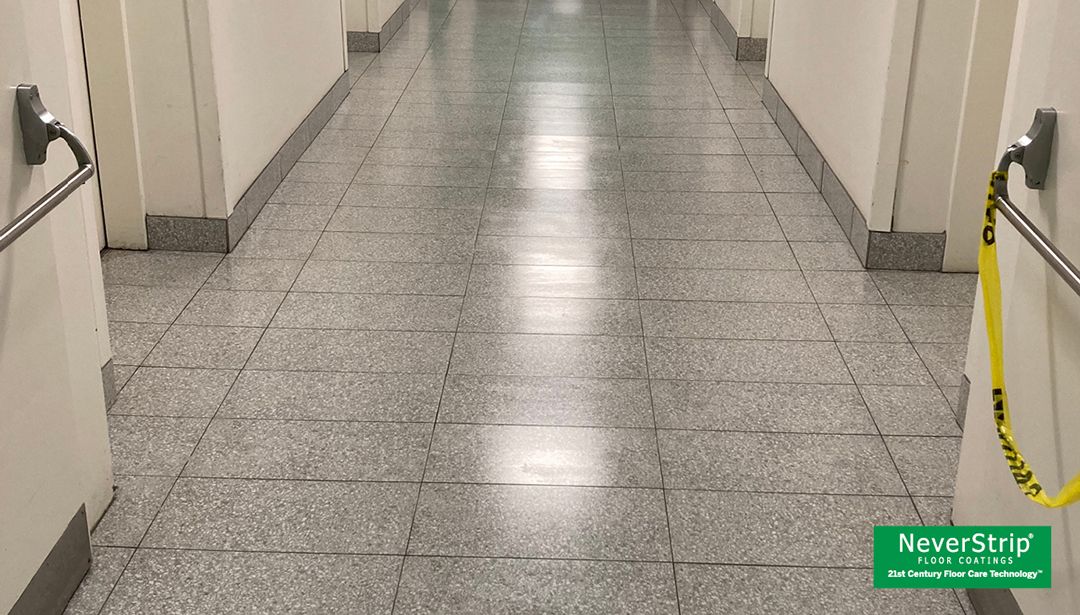
What Nine Years of No-Strip Maintenance Looks Like

Victoria College in Victoria, Texas, has been using Micron Sealers on its LVT for nine years on its 33,000 sq. feet of hallways with 4,000 students.

Nine years with no stripping. The floors remain cost-effectively refreshable, maintained and renewed without ever returning to a strip-and-recoat cycle. The strip-recoat-strip-recoat pattern, once a fixture of their program, simply stopped.

For a community college managing large floor areas with a lean custodial team, that’s not a minor efficiency improvement. That’s a fundamentally different way to run a maintenance program — one that compounds in value over time, because it removes the labor cost and the schedule disruption at the same time, every year.

The summer window at Victoria College didn’t suddenly become more generous. It became less necessary to rely on.

Is Your Program Built for a Window You No Longer Have?

If your floor care program is still built around strip-and-wax, it was designed for a building that periodically sat empty. That building doesn’t exist the way it used to. The method hasn’t changed. The reality it was built for has.

A few questions worth considering:

• How many of your scheduled summer maintenance weeks are actually uninterrupted versus interrupted by programs, practices, or early staff returns?

• What percentage of your floor maintenance budget is labor versus product?

• When was the last time your strip-and-recoat schedule genuinely held to plan?

• Are you managing any complaints or compliance concerns around the chemicals your current program requires?

• If stripping were no longer part of the program, what would that change about your summer window?

The summer of 2026 is already underway in terms of planning. If this is the year to look at a different approach, the best time to start that conversation is before the schedule is locked.

NeverStrip’s Micron Sealer systems have been applied and maintained across tens of millions of square feet of commercial flooring globally since 2013. If you’d like to talk through what a no-strip program might look like for your floors, we’re happy to schedule a call.

[Contact Us] | [Download a Case Study]

Sources

Sims, Coulter. “Navigating the Challenges of School Floor Care.” Cleaning & Maintenance Management, May 22, 2025. cmmonline.com/articles/navigating-the-challenges-of-school-floor-care

The Budd Group. “When Is the Best Time to Apply Commercial Floor Wax to a School’s Gymnasium?” buddgroup.com/when-is-the-best-time-to-apply-commercial-floor-wax-to-a-schools-gymnasium