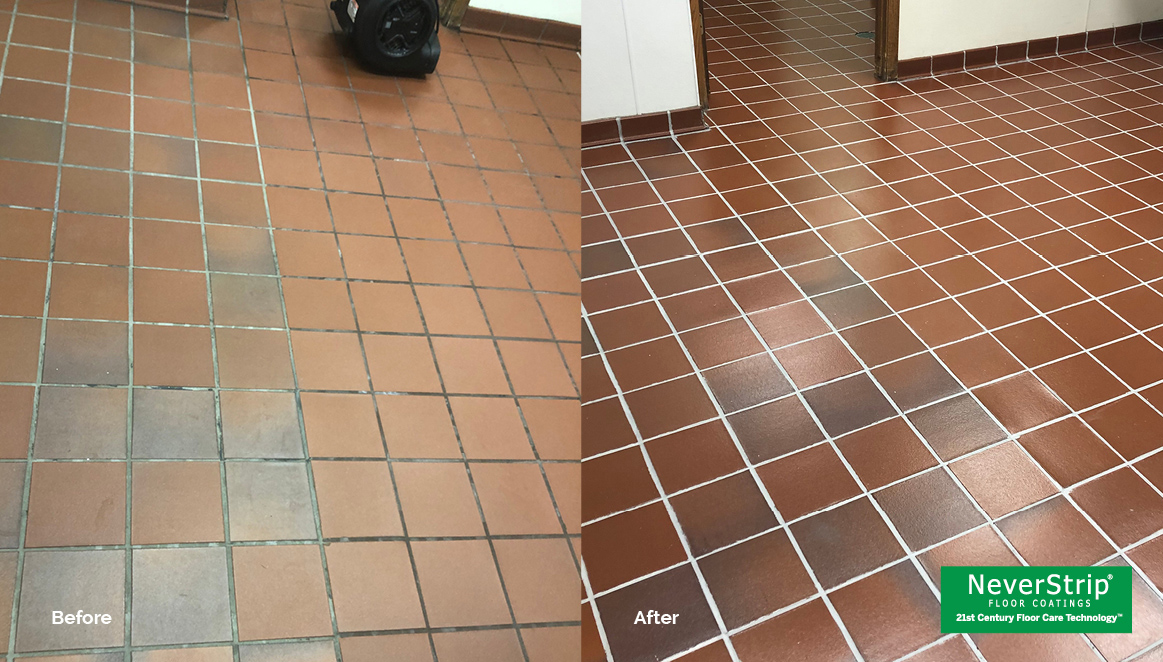
commercial kitchen quarry tile floor

What Contractors Gain from Micron Sealer Systems

Most of what gets written about non-stripping floor protection is aimed at facility managers. Contractors read it differently. The questions aren't about lifecycle cost or sustainability reporting. They're about the job itself: how long does this take, how many coats, what happens if it goes wrong, and will the client call back in three months with a complaint?

Micron Sealer systems change the answer to all four, and they change the business model question contractors ask most often too.

Faster Turnaround on the Job

Micron Sealers apply at roughly 1.65 microns dry film per application with a dry time of about 10 minutes between coats. That's a meaningfully tighter schedule than a strip-and-wax job, where each coat needs longer to cure before the next one goes down and the whole floor needs extended time before it can handle foot traffic again.

For a contractor bidding a job with a tight facility-access window, whether that's a retail floor that can only close overnight or a school corridor with a narrow summer slot, faster dry times mean more square footage covered per shift and fewer scheduling conflicts with the client.

Fewer Callbacks After the Job Is Done

Callbacks are one of the most expensive parts of flooring work that never shows up in the original bid. A traditional finish that starts looking uneven, dull, or worn within months puts the contractor back on-site, often at their own cost, to fix a problem the client assumes was a workmanship issue rather than a product limitation.

Because Micron Sealers are cost-effectively refreshable rather than dependent on a strip-and-recoat cycle, appearance holds more consistently over time. There's no stripping in a normal lifecycle, which removes the most common reason a client calls a contractor back to redo work that was done the first time correctly.

The Real Math on Revenue

The most common hesitation contractors raise about non-stripping systems isn't about the product. It's about the business model. If floors don't need what's commonly known as a strip-and-wax cycle on a recurring basis, doesn't that mean losing a recurring line of revenue?

The math works differently than it looks at first.

Strip-and-wax revenue was never really about the task. It was about the outcome: a floor that looks right and a client who keeps calling. That outcome doesn't disappear with Micron Sealers, it gets delivered with less labor per job. A contractor is still being paid for the result: a floor that performs and holds its appearance. What changes is how much time and crew it takes to deliver that result, which means better margin per job rather than less revenue overall.

The client side of that equation matters just as much. Buildings are staying occupied more of the time, not less. Retail floors, schools, and healthcare facilities all have shrinking windows where a space can be closed for a full strip cycle. A system that delivers the same result without requiring the floor to shut down isn't just a labor savings for the contractor, it's the thing the client actually wants and is increasingly hard to get elsewhere.

That's the shift: from getting paid for a recurring task to getting paid for a result that costs less to deliver and disrupts the client's operation less to achieve.

  • Micron Sealers - contractors gain (1).png

Surface Compatibility Without Guesswork

Micron Sealers apply across all hard floor surfaces, including LVT, VCT, linoleum, rubber, stone, terrazzo, concrete, ceramic, porcelain, and brick. For contractors who bid across multiple flooring types in a single facility, that range means one system instead of juggling different products, cure times, and maintenance instructions for every surface type on the job.

Pad compatibility matters here too. Diamond pads, including the 3500 Green Restoration Pad, the 8000 Silver Burnishing Pad, and the Clean and Buff Pad, require specific handling with Micron Sealer systems. Getting that right the first time is part of what keeps a job from needing a return visit.

What This Means for Client Trust

A contractor's reputation is built on floors that still look right a year after the crew has left, not just on the day of the walkthrough. A system that doesn't require a strip cycle, doesn't degrade on a predictable schedule, and doesn't need a callback to fix an appearance issue is a system that makes the contractor look good long after the invoice is paid.

That's the difference between a one-time job and a client who calls the same contractor for the next facility, and the one after that.

Frequently Asked Questions

How much faster is a Micron Sealer application compared to a strip-and-wax job?

Micron Sealers dry in about 10 minutes between coats, compared to the longer cure times a strip-and-wax cycle typically requires, which allows more square footage to be completed per shift.

Do Micron Sealers reduce the number of callbacks contractors receive?

Yes. Because Micron Sealers are refreshable rather than dependent on a strip cycle, appearance holds more consistently over time, which reduces the most common reason for a callback.

If floors don't need to be stripped, how do contractors keep that revenue?

The revenue was always tied to the outcome, a floor that looks right and stays that way, not the task itself. Micron Sealers deliver that outcome with less labor per job, which supports better margin per job rather than less revenue overall.

What surfaces can a single Micron Sealer system cover on one job?

LVT, VCT, sheet vinyl, linoleum, rubber, bio-based tile, stone, terrazzo, concrete, ceramic, porcelain, and brick are all compatible with Micron Sealer systems.

Are there special pad requirements when working with Micron Sealers?

Yes. Diamond pads, including the 3500 Green Restoration Pad, 8000 Silver Burnishing Pad, and Clean and Buff Pad, require specific handling to avoid surface issues.

Worth a Conversation?

If callbacks and tight turnaround windows are cutting into your margins on flooring jobs, or if you're wondering what a non-stripping system means for your business model, it's worth looking at how the math actually plays out. [Contact Us] to talk through how Micron Sealers fit into your next bid.