
There's a common assumption in facility and procurement conversations right now: PFAS-free is the safer, more compliant choice, but it probably performs a step below the products it's replacing. To understand why that assumption exists, and why it doesn't hold up against current performance data, it helps to start with what PFAS actually is.
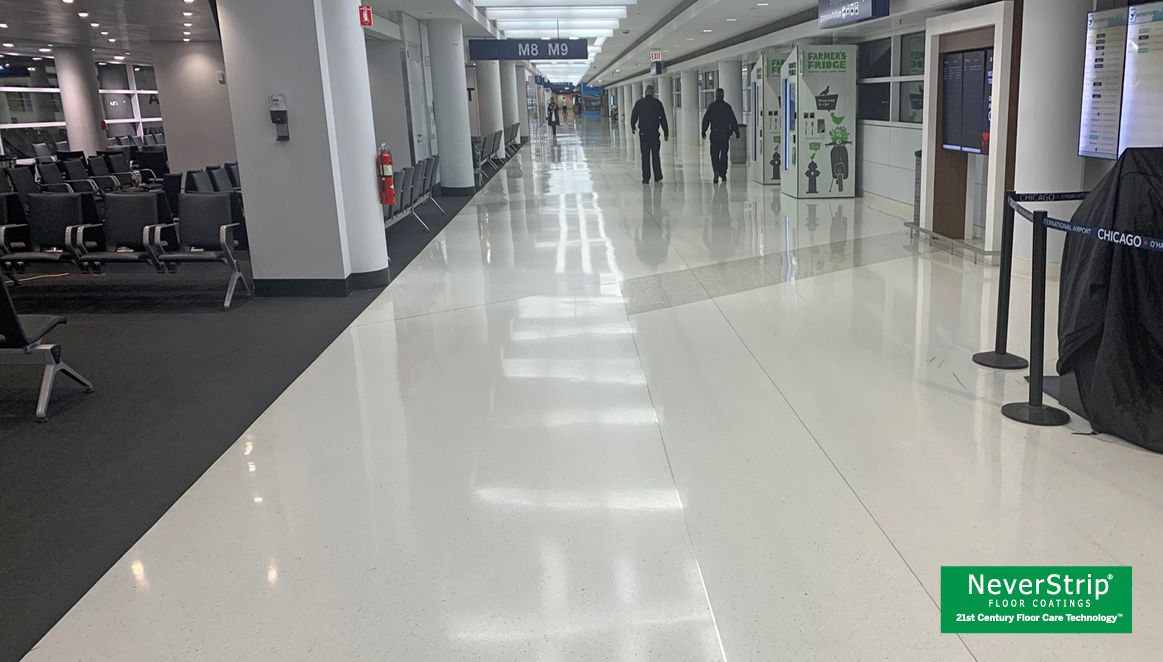
What Is PFAS, Why the Industry Is Moving Away From It, and How NeverStrip Has Always Been PFAS-Free
What is PFAS, and Why Was it Used in the First Place?
PFAS, short for per- and polyfluoroalkyl substances, is a large family of synthetic chemicals developed starting in the 1930s and 1940s. They became widely used across industries because of one property: an exceptionally strong resistance to water, oil, heat, and staining. That made them the default ingredient in everything from nonstick cookware and firefighting foam to fabric treatments, food packaging, and floor finishes.
In floor and surface care specifically, PFAS chemistry became the industry standard for stain and water repellency for decades. It worked, which is exactly why it became so widely adopted, and why moving away from it now raises a real question: does removing PFAS mean giving up the performance it delivered?
Why the Industry Is Moving Away From PFAS
The same chemical stability that made PFAS effective is also what makes it persistent. PFAS compounds don't break down naturally in the environment, which has earned them the label "forever chemicals," and growing research has linked long-term PFAS exposure to environmental and health concerns. That combination has moved PFAS from an industrial default to a regulatory target.
The shift isn't hypothetical or slow-moving. It's already written into state law:
Washington State now requires reporting on PFAS in hard surface sealers and floor waxes and polishes, with sales restrictions on these categories taking effect January 1, 2027. [Source: Fox Rothschild, "Ringing in 2026"]
Maine banned PFAS in general cleaning products, a category that explicitly includes floor care products, effective January 1, 2026. [Source: Maine Revised Statutes, Title 38, §1614]
Colorado restricts PFAS in most cleaning products, with a narrow exception carved out specifically for medical floor maintenance products, meaning the regulatory pressure is already landing directly inside the floor care category. [Source: Manufacturing Dive, "State PFAS Laws and Regulations Taking Effect in 2026"]
Nearly 100 new PFAS-related bills were introduced across 17 states in 2026 alone, with hundreds more carried over from prior sessions. [Source: MultiState, "State PFAS Legislation 2026"] For facilities and the contractors who service them, PFAS-free isn't a future consideration. In a growing number of states, it's already a compliance requirement.
NeverStrip Has Always Been PFAS-Free
This is where NeverStrip's position is different from most of the industry: there was never a reformulation to react to. NeverStrip's Micron Sealer systems have been built on PFAS-free technology since the company began protecting commercial floors globally in 2013. NeverStrip Shield was developed the same way: PFAS-free from the ground up, not as a later response to regulation.
That distinction matters because it shows up in the performance data, not just the ingredient list.
What Micron Sealers Deliver
Micron Sealer systems are applied as a dense, hard, cost-effectively refreshable micron-thin layer, roughly 1.65 microns of dry film per application, with a dry time of about 10 minutes between coats. Rather than building up thick layers that eventually require stripping, the system is designed to be continuously refreshed, often without new applications, instead of being removed and reapplied. There's no stripping needed in a normal lifecycle.
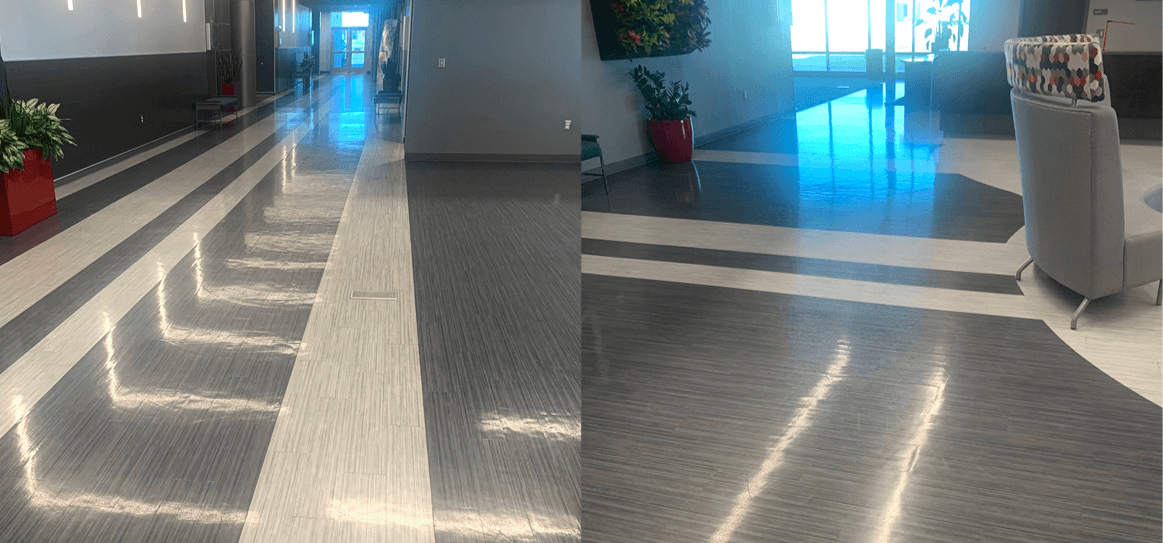
Micron Sealers also do more than protect. Applied as a base coat, they can enhance color depth and restore shine on floors that have dulled over time, giving a facility a real appearance upgrade before any additional protection is layered on top.
The real-world track record backs this up. Victoria College in Victoria, Texas (note: the case study is a few years older now) has run 36,000 square feet of LVT for nine+ years without a strip cycle, maintained in-house with routine mopping and auto-scrubbing. That's not a lab result. That's a floor still performing under daily traffic, nearly a decade in.
How Micron Sealers and NeverStrip Shield Work Together
The two systems can be used independently or in combination, and the order matters. Micron Sealer can be applied first as a base layer to reduce porosity, enhance appearance, and restore shine. Once the finish is where the facility wants it, NeverStrip Shield is applied as a compatible top layer to provide ongoing odor control, stain release, and durability, without changing the color, sheen, or texture established by the Micron Sealer underneath.
NeverStrip Shield can also be applied directly to floors and other surfaces on its own, without a Micron Sealer base, when a facility needs protection without a change or improvement of appearance. This includes hard floor surfaces like ceramic and porcelain tile, quarry tile, natural stone, terrazzo, concrete, linoleum, LVT, VCT, and sheet vinyl, as well as soft surfaces like carpet, upholstery, and textiles, and vertical or specialty surfaces like restroom partitions and walls. That flexibility lets a facility apply protection exactly where it's needed, whether that's a full floor system or a single problem surface, rather than committing to one system across every application.
What This Means for Procurement and Compliance Teams
For facilities navigating state-level PFAS restrictions or internal sustainability mandates, the practical question isn't whether to eventually go PFAS-free. In several states, that decision is already being made for them. The real question is whether the PFAS-free products being specified actually perform, and that's answerable with test data and track record rather than assumption.
Frequently Asked Questions
What is PFAS, and why was it used in floor care?
PFAS is a family of synthetic chemicals developed in the 1930s and 40s, valued for strong resistance to water, oil, heat, and staining. It became the industry default for stain and water repellency in floor finishes and surface treatments for decades.
Why is PFAS being phased out?
PFAS compounds don't break down naturally in the environment, which has led to environmental and health concerns and a growing wave of state regulations restricting its use, including in cleaning products and hard surface sealers.
Are NeverStrip's Micron Sealers and NeverStrip Shield PFAS-free?
Yes. Both have been built on PFAS-free technology from the start, Micron Sealers since NeverStrip began protecting floors globally in 2013, and Shield from its original development.
Does NeverStrip Shield provide ongoing odor control, or does it just mask odors temporarily?
NeverStrip Shield doesn't mask odors. Its patented technology continuously breaks down VOCs and odor-causing compounds at the molecular level, providing ongoing support rather than one-time odor control.
Can Micron Sealers and NeverStrip Shield be used together?
Yes. Micron Sealer is often applied first to enhance appearance and restore shine, with NeverStrip Shield applied as a top layer for ongoing odor control, stain release, and durability. Each can also be used independently.