
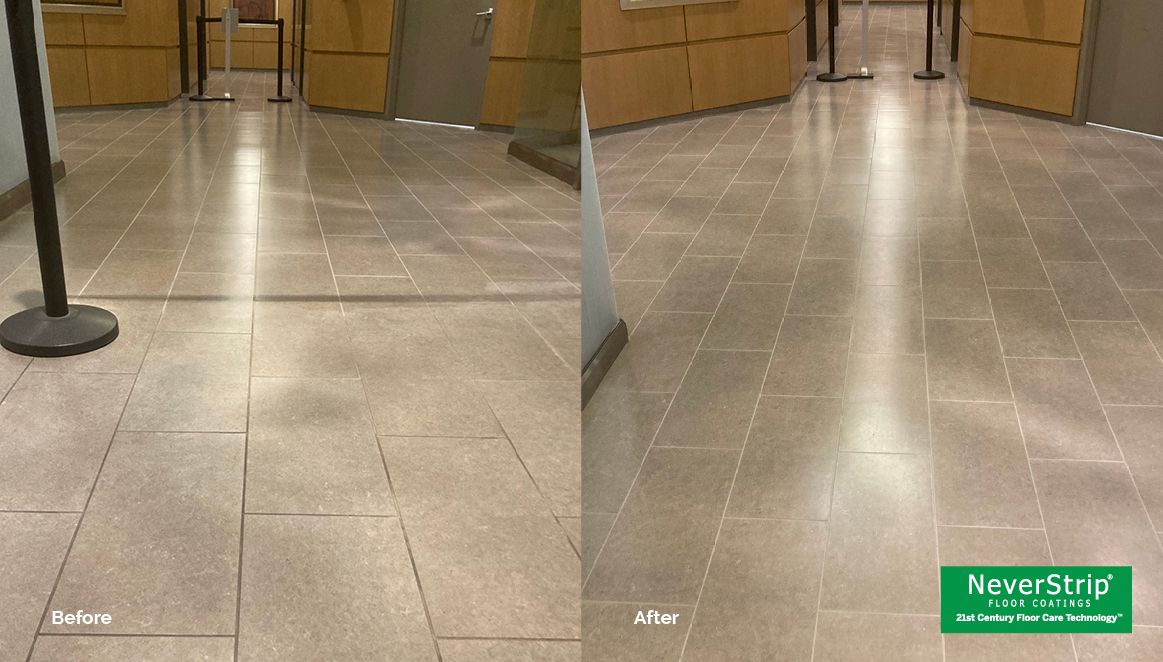
Micron Sealers Reduce Floor Maintenance Downtime in Commercial Facilities

How Micron Sealers Reduce Long-Term Maintenance Disruptions

Floor maintenance disruptions are a common challenge in occupied commercial facilities. While daily cleaning is typically manageable, long-term floor protection programs often introduce downtime through stripping, extended cure times, and restricted access. In buildings that operate continuously, these disruptions affect schedules, labor planning, and occupant experience.

Micron Sealer systems were developed to address these challenges by supporting non-stripping floor protection. Instead of relying on stripping-based floor finish programs, Micron Sealers change how floors are maintained over time. The result is a maintenance model designed for occupied environments where consistent appearance and uninterrupted use matter.

Why Traditional Floor Maintenance Disrupts Operations

Most significant maintenance disruptions are tied to traditional floor finish systems. These systems depend on thick, sacrificial finish layers that wear unevenly under traffic. As appearance declines, the finish must be stripped and rebuilt to restore uniformity.

That process introduces predictable operational issues:

  • Areas must be closed or access restricted

  • Maintenance is often scheduled overnight or on weekends

  • Odor, noise, and chemical exposure become concerns

  • Specialized labor or outside contractors are often required

  • Appearance varies widely between stripping cycles

These disruptions are not accidental. They are built into the stripping-and-recoating maintenance model.

Micron Sealers Change the Maintenance Model

Micron Sealers provide micron-thin, bonded protection that integrates with the floor surface rather than forming a thick layer on top. Because the protection is thin, refreshable, does not yellow and is durable, so soil stays on top, it can be maintained instead of removed.

This shifts long-term floor care in several important ways:

  • Floors are maintained incrementally rather than reset

  • Maintenance can be completed in smaller, controlled sections

  • Building operations can continue during floor care activities

  • Appearance is preserved more consistently over time

For facilities that cannot easily take space offline, this approach significantly reduces disruption.

How to Reduce Floor Maintenance Downtime in Occupied Buildings

Reducing floor maintenance downtime requires eliminating the activities that force large shutdowns. In most facilities, stripping is the primary cause of extended downtime. It requires aggressive chemicals, multiple labor steps, and long recovery periods before the floor can return to service.

Micron Sealer systems reduce downtime by removing stripping from the normal maintenance lifecycle. Floors are cleaned and refreshed as needed, maintaining their appearance without destructive processes. Because applications dry quickly, maintenance can be scheduled during normal operating hours or short access windows.

This approach enables facilities to proactively maintain floors rather than reactively, supporting consistent use of space without recurring closures.

Shorter Maintenance Windows and Predictable Downtime

Micron Sealer applications typically dry in approximately ten minutes between applications. This allows maintenance teams to work efficiently and return areas to service quickly.

Compared to traditional floor finish systems, this supports:

  • Less reliance on overnight or weekend work

  • Faster reopening of maintained areas

  • Greater flexibility when coordinating around building use

Maintenance becomes predictable and easier to integrate into daily operations.

Grocery Store.jpeg

Refreshing Floors Instead of Stripping Them

Stripping is one of the most disruptive elements of traditional floor maintenance. It is labor-intensive, difficult to schedule, and often triggered by visible appearance failure rather than planned timing.

Micron Sealer systems replace this reset cycle with a refresh model. Floors are maintained, cleaned, and refreshed without removing existing protection. High-traffic areas can be addressed independently, allowing facilities to manage wear without shutting down large areas.

Over time, the absence of stripping becomes one of the most meaningful operational benefits.

Fewer Unplanned Maintenance Events

Because Micron Sealers wear gradually and predictably, floors are less likely to experience sudden appearance failures that require immediate intervention. This reduces emergency maintenance projects that disrupt schedules and budgets.

Facilities using Micron Sealer systems often experience:

  • Fewer reactive maintenance events

  • Improved long-term planning and budgeting

  • Reduced complaints related to uneven wear or visual decline

Predictability supports steadier operations and reduces pressure on maintenance teams.

Supporting Continuous Building Use Across Floor Types

Micron Sealers are compatible with nearly all non-carpet floor surfaces, including LVT, VCT, sheet vinyl, linoleum, rubber, bio-based tile, stone, terrazzo, concrete, ceramic, porcelain, and brick.

This compatibility allows facilities with multiple floor types to apply a consistent maintenance philosophy across the building. Rather than managing different stripping cycles and finish systems, teams can focus on maintaining appearance with minimal disruption.

For readers who want a deeper explanation of how Micron Sealer systems work and why they do not require stripping in a normal lifecycle, this topic is covered in detail in the Micron Sealers overview.

Frequently Asked Questions

Do Micron Sealers eliminate the need for floor maintenance?

No. Floors still require routine cleaning and periodic refresh. Micron Sealers eliminate stripping in a normal lifecycle, not maintenance itself.

Can Micron Sealers be applied in occupied buildings?

Yes. Applications are fast-drying and low-disruption, making Micron Sealers suitable for active facilities.

How do Micron Sealers compare to traditional floor finish systems?

Traditional systems rely on sacrificial finish layers that must be stripped and replaced. Micron Sealer systems focus on maintaining or restoring appearance through refreshable, durable protection without stripping.

Do Micron Sealers reduce long-term labor requirements?

Over time, yes. Eliminating stripping and reducing emergency maintenance supports less floor care labor and more predictable scheduling.

When were Micron Sealers introduced to the North American Floor Care Marketplace?

NeverStrip introduced Micron Sealers during 2013.

Learn More About Reducing Maintenance Disruptions

Facilities looking to reduce floor maintenance disruptions while maintaining a consistent appearance can use Micron Sealer systems as a non-stripping alternative designed for occupied environments. Contact NeverStrip for guidance or explore real-world Micron Sealer applications across different facility types.