
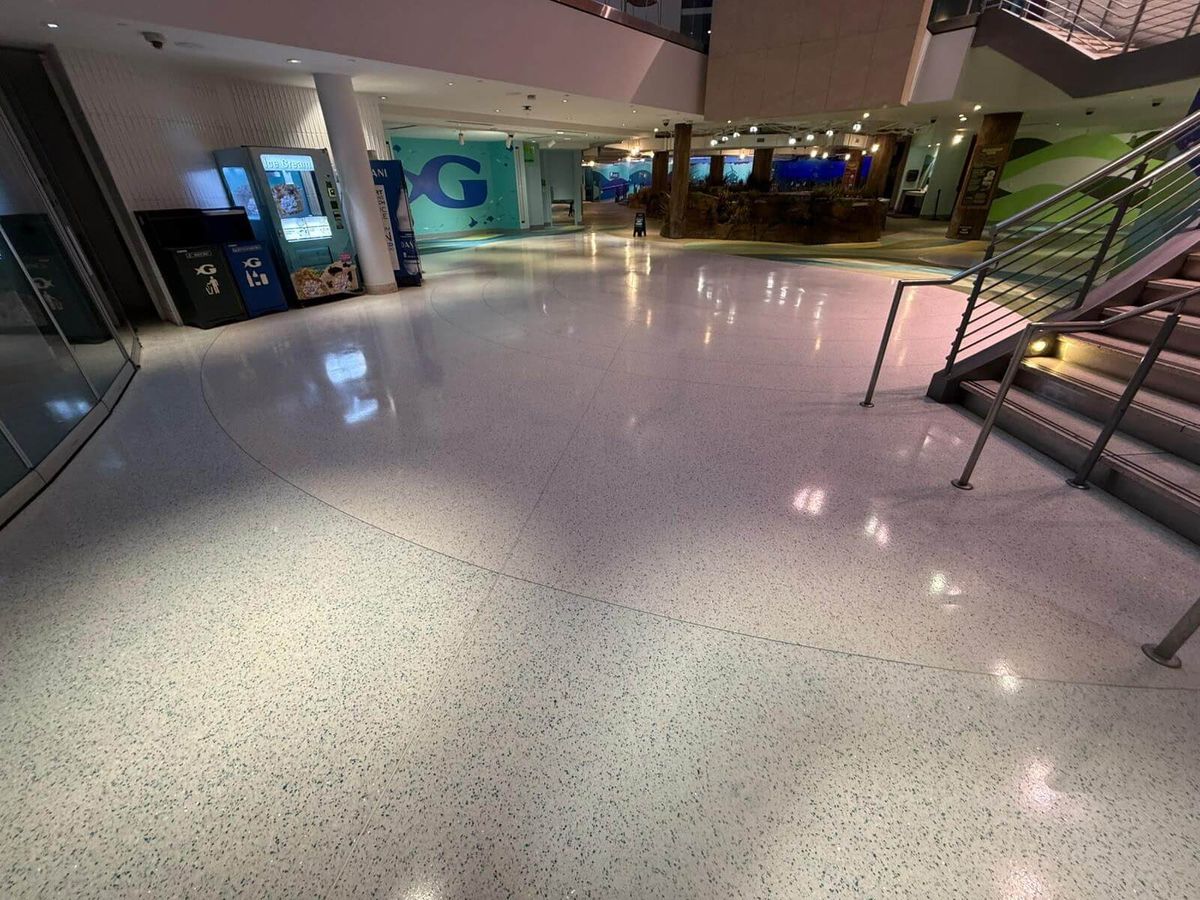
Georgia aquarium-After.jpeg

Why Non-Stripping Floor Maintenance Matters

Modern facilities are expected to remain open, accessible, and visually consistent with fewer resources and less tolerance for disruption. While routine floor cleaning is generally predictable, long-term floor maintenance often creates operational challenges that are harder to absorb.

In many cases, the issue is not the floor itself but the maintenance model being used. Traditional stripping-based programs were designed for environments where extended downtime was acceptable and the floor care products available required periodic removal. In today’s facilities, these assumptions no longer hold true.

Non-stripping floor maintenance is now not only possible but preferable and is increasingly important as organizations seek to preserve appearance without disrupting daily operations.
How Stripping Floor Finish/Wax Became a Standard Practice

Traditional floor finish systems rely on thick, sacrificial finish layers that sit on top of the floor surface. Over time, these layers wear unevenly, are deeply embedded with soil, discolor, or lose clarity. Once appearance declines past a certain point, the finish must be stripped completely and rebuilt.

For decades, this approach was widely accepted because maintenance could often be pushed to nights, weekends, or seasonal shutdowns; floor care labor was widely available and affordable and sustainability was a less important priority. As operational expectations and resources have changed, the limitations of this model have become more apparent.

Stripping introduces a series of challenges that extend beyond the floor itself:

  • Areas must be closed or access restricted

  • Maintenance schedules are dictated by shutdown availability

  • Odor, noise, and chemical exposure affect building users

  • Labor requirements increase during reset cycles

  • Appearance fluctuates between major maintenance events

These impacts are inherent to the stripping-and-recoating process.

Why Stripping Conflicts With Modern Facility Operations

Most facilities today operate with limited tolerance for downtime. Healthcare, education, retail, public spaces, and commercial buildings all rely on continuous access and consistent appearance.

Stripping-based maintenance forces operations to work around the most disruptive activity in the floor care cycle. Corridors, classrooms, sales floors, or public areas must be taken offline, often on compressed schedules that increase labor pressure and risk.

As buildings move toward longer operating hours and greater utilization, this conflict becomes harder to manage.

The Hidden Operational Costs of Stripping

The true cost of stripping is rarely limited to labor and chemicals. Disruption has less visible but equally impactful operational consequences.

These include:

  • Loss of usable space during maintenance

  • Increased coordination between departments

  • Reliance on overtime or third-party labor

  • Higher risk of rushed or inconsistent work

  • Deferred maintenance when shutdowns are not feasible

Over time, these pressures often lead to delayed stripping, followed by sudden appearance failures and reactive maintenance.

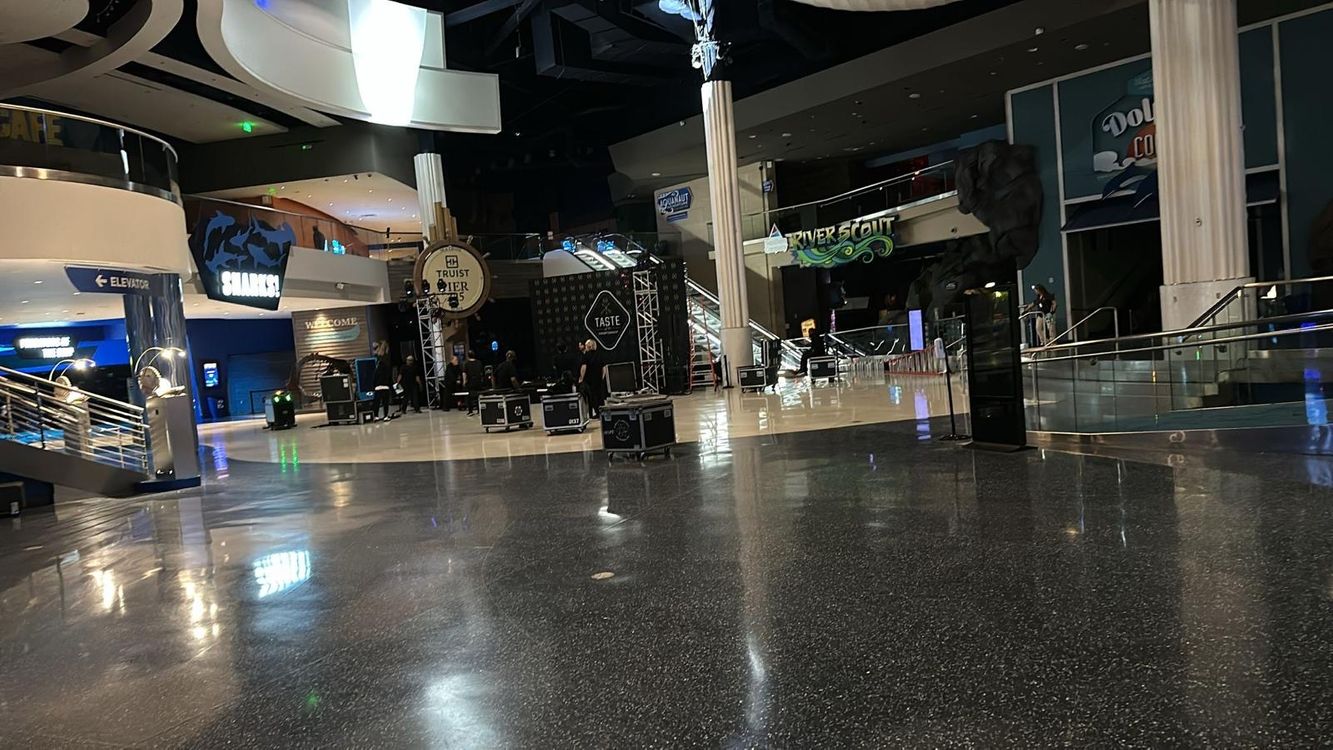
Georgia Aquarium High Traffic Area

What Non-Stripping Floor Maintenance Looks Like

Non-stripping floor maintenance replaces reset cycles with a maintain-and-refresh approach. Instead of allowing protection to degrade until it must be removed, the floor is maintained incrementally.

This model typically includes:

  • Higher performing, non-yellowing, refreshable floor care treatments without stripping

  • Routine cleaning appropriate to the floor type

  • Periodic refresh to maintain or restore appearance

  • Targeted attention to high-traffic areas

  • Preservation of existing protection rather than removal

Because protection is not repeatedly stripped away, maintenance becomes more predictable and easier to integrate into normal operations.

Why Non-Stripping Programs Support Consistent Appearance

Traditional floor finish programs often produce wide swings in appearance. Floors look best immediately after stripping and recoating, then their appearance declines steadily until the next reset.

Non-stripping maintenance supports a narrower range of appearances. Floors are kept within acceptable visual standards through refresh rather than dramatic rebuilds. This consistency reduces complaints and helps facilities maintain a stable, professional environment year-round.

When Facilities Should Consider Moving Away From Stripping

Not every facility faces the same constraints, but many begin to outgrow stripping-based maintenance as operations evolve. Common indicators include:

  • Reduced access to shutdown windows

  • Increasing labor constraints

  • Greater emphasis on continuous access

  • Rising floor care labor rates

  • Frustration with appearance swings between maintenance cycles

  • Rising lifecycle costs tied to floor care

When these conditions exist, non-stripping floor maintenance becomes a practical necessity rather than an alternative.

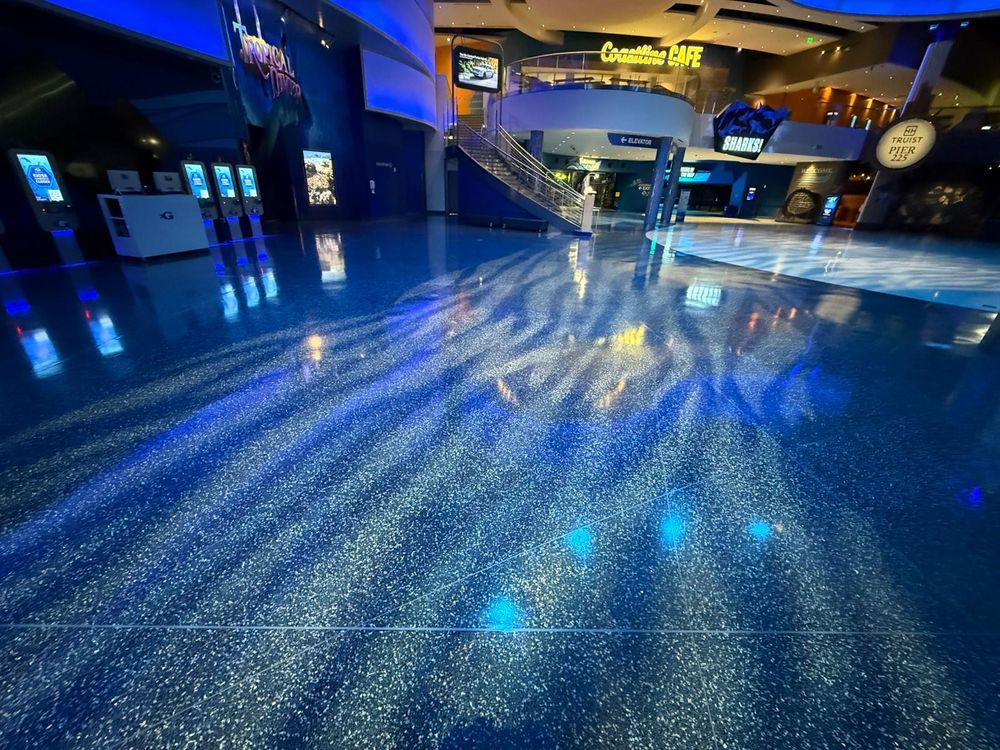
Georgia Aquarium High Traffic Area

How Micron Sealer Systems Support Non-Stripping Maintenance

Micron Sealer systems were developed specifically to support non-stripping floor protection. By forming a micron-thin, inorganic, bonded layer that integrates with the floor surface, Micron Sealers can be maintained and refreshed without the need for destructive removal.

This approach aligns with modern facility needs by allowing:

  • Fast-drying applications

  • Smaller maintenance sections

  • Reduced downtime

  • Elimination of stripping in a normal lifecycle

  • Lower floor care lifecycle costs

For facilities seeking guidance on implementing non-stripping programs, NeverStrip offers Micron Sealer systems that work across nearly all non-carpet floor types.

Frequently Asked Questions

Is non-stripping floor maintenance realistic for high-traffic buildings?

Yes. Non-stripping programs are often better suited to high-traffic environments because they allow targeted refresh and gradual wear management.

Does non-stripping maintenance eliminate the need for professional floor care?

No. Floors still require routine cleaning and periodic maintenance. The difference is that maintenance is additive rather than destructive.

Can non-stripping maintenance be used across different floor types?

Yes. Modern non-stripping systems can support a wide range of resilient and hard surface floors, enabling consistent programs in mixed-floor facilities.

Is stripping ever required?

Under abnormal conditions or when legacy finishes fail, stripping may be necessary. Non-stripping systems are designed to eliminate stripping in a normal lifecycle, not to deny its existence entirely.

Learning More About Non-Stripping Floor Maintenance

As facilities continue to operate with less tolerance for disruption, non-stripping floor maintenance has become an important part of long-term planning. Understanding when and why to move away from stripping-based programs helps organizations protect appearance while supporting continuous use.

For a deeper explanation of how Micron Sealer systems work and how they fit into a non-stripping maintenance model, read more about Micron Sealers and contact NeverStrip for guidance.